Sovereignty is more than data location
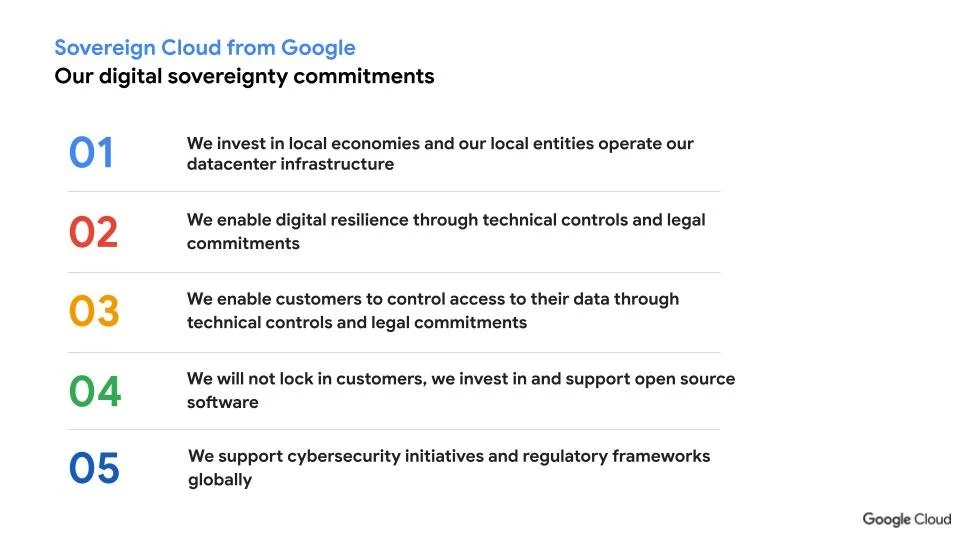
Digital sovereignty includes control over data location, encryption keys, administrator access, software supply chains, and operations. Keeping data in one region does not create meaningful sovereignty without key and access control.
The architecture should support connected, on-premises, or fully isolated environments while producing audit evidence in every mode. Key ownership, separation of duties, and revocable access must be explicit and testable.
Control, evidence, and accountability
Sovereign cloud becomes meaningful when an organization can prove its controls. Written policy is insufficient without access reports, key events, backup locations, and recovery-test results. The architecture should generate and retain evidence continuously.
Sovereignty requirements also vary. Some data may remain in public cloud with customer-controlled keys, some requires connected on-premises hardware, and a narrow set may need a fully isolated environment. Precise classification avoids imposing the cost of the most restrictive environment on every system.
Contracts and operating models should identify privileged-access owners, incident notification paths, and exit procedures. Portability of data and keys is part of sovereignty and should not be postponed until the relationship ends.
Test sovereignty with a failure scenario
Ask a concrete question: if connectivity to a provider fails or privileged administrator access is revoked, which services keep working? Can the organization still control decrypted data, keys, and backups as promised? The answers distinguish a data-residency claim from operational control.
Review the location of a second backup and the authority to restore it separately. Local support, exit terms, administrator-access records, and recovery tests should match the data's sensitivity. A fully isolated environment is not necessary for every dataset; risk-matched controls also keep costs and audits manageable.
Match controls to each data class
Classify data and workloads by sensitivity and regulatory obligation. For each class, define execution location, key model, backup path, and accountable owner so the architecture matches actual risk.
This Liyan Knowledge article is an editorial synthesis based on the original source.View original source